


Food safety & integrity
Explore expert insights on food safety and integrity, including allergen management, contamination prevention, food fraud detection, microbiological risks, hygiene practices, recalls and incident response strategies that help manufacturers protect consumers, maintain compliance and strengthen product trust.
Webinars and whitepapers
- Previous
- Next















More Food safety & integrity
 Article
New Food explains: What viable PFAS-free food packaging really requires
With new EU limits on PFAS in food-contact packaging now in force, New Food speaks to VTT experts about balancing product performance requirements with viable PFAS-free alternatives.
 News
NewsMagnetic nanoparticles offer new route to PFAS-free water
Researchers have engineered magnetic iron oxide nanoparticles with specially modified surfaces that can bind and extract PFAS compounds and fluorine-containing microplastics from contaminated water sources.
 News
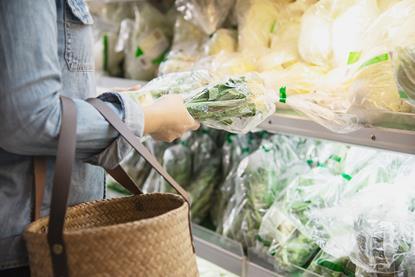
NewsPET industry launches shared platform for food contact safety data
PETCORE EUROPE has launched GeNi, a centralised interlaboratory data platform developed with KÖR, to address fragmented testing practices and strengthen food safety knowledge across the PET packaging value chain.
Join now
Unlock exclusive industry insights
- Bookmark articles and resources to access anytime
- Enjoy free access to industry leading resources, webinars and insights
- Stay informed with in-depth coverage of food safety, quality, innovation and regulatory change from across the global food and beverage industry
- Receive updates and recommendations tailored to your professional interests
More Food safety & integrity
 Article
Why fragmented product data raises the cost of food non-compliance
Specright’s Andy Stark explores how fragmented product data can increase compliance risk, slow reformulation and drain R&D capacity – and why trusted data is becoming critical to effective AI adoption.
 News
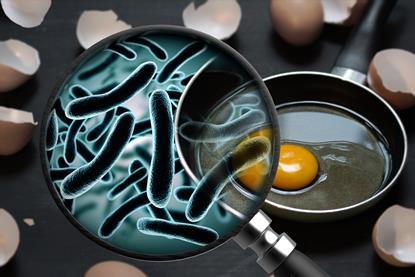
NewsSalmonella outbreaks linked to imported eggs remain under investigation
Three clusters of Salmonella Enteritidis infections in England have resulted in nearly 600 confirmed cases and two deaths, with public health authorities continuing to investigate links to imported eggs.
 Opinion
Brazilian beef and the UK: why Europe’s food safety decisions matter again for Britain
With the EU ban on Brazilian beef reigniting debate over import standards, Chris Elliott examines the implications for farmers, consumers and UK food security.
More Food safety & integrity
 Opinion
A big UK food policy opportunity… to be seized!
Clive Black lays out potential scenarios governing the health of the UK’s food system – maintaining that securing its resilience is within grasp, if only government will but reach for it.
 Opinion
Imported eggs and Salmonella: the cracks in Britain’s food-safety defences
Recent Salmonella outbreaks have exposed vulnerabilities in UK egg supply chains. Chris Elliott examines their complex routes into food service and where improvements are needed.
 News
NewsNew grouping approach targets hazardous chemicals in food packaging
A peer-reviewed study found 87 percent of more than 15,000 food contact chemicals lack sufficient safety data, highlighting the need for more targeted risk assessment.
 Article
PFAS analysis at a turning point: from trace detection to defensible, sustainable decisions
How laboratories can manage contamination, matrix effects, expanding analyte lists and regulatory change – while reducing the environmental cost of high-throughput LC–MS/MS.
 News
NewsDubai Municipality automated oil and fat testing cuts analysis to two minutes
Dubai Municipality has introduced automated oil and fat testing, raising daily capacity tenfold while cutting analysis time to two minutes.
 Article
New Food explains: How FSA national regulation proposals could reshape industry oversight
The UK Government has asked the FSA to develop national oversight of large food businesses. Walker Morris’ Chris McGarvey explains what it could mean for the industry.
 News
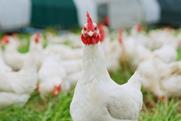
NewsElectron beam technology shows promise for safer poultry processing
A new study in Poultry Science explores whether electron beam irradiation could reduce pathogens such as Salmonella and Campylobacter in poultry without compromising meat quality or consumer appeal.
 News
NewsCosta cappuccino contains nearly four times as much caffeine as Starbucks, Which? finds
Which? finds major caffeine differences across Costa, Pret, Starbucks and other chains, complicating efforts by consumers to monitor their intake.
 News
NewsSalmonella outbreak linked to imported eggs leaves one dead and hundreds ill
A nationwide Salmonella Enteritidis outbreak has infected 207 people and killed one, as investigators examine the potential role of imported eggs in the nationwide outbreak.
 News
NewsFood fraud costs UK economy up to £2 billion annually, study finds
University of Portsmouth researchers estimate food fraud costs the UK economy up to £2 billion annually, displacing sales of genuine goods.
 News
NewsFDA targets longstanding GRAS loophole but UPF definition remains unpublished
The US Department of Health and Human Services proposes mandatory GRAS notifications but leaves the UPF definition still unresolved.
 Article
How laboratory AI agents can transform R&D and quality in the food industry
Food and beverage laboratories face growing pressure to innovate without compromising safety. This article explores how agentic AI can connect siloed data, strengthen predictive quality and accelerate R&D.
 Article
Why food laboratories need analytical systems that deliver more than sensitivity
Can laboratories increase sensitivity without compromising routine reliability, workflow efficiency or resource use? The LCMS-8065XE was designed to address these growing analytical demands.
 News
NewsCDC links 345 Salmonella cases to recalled Mexican jalapeños
US authorities have launched a recall of Mexican jalapeños after a Salmonella outbreak made 345 people ill across 27 states.
 Opinion
The perfect storm for seafood fraud
The seafood industry is enormous, so too its supply chains. With consumers willing to pay premium prices for the healthy protein source, fraudulent practices have inevitably followed – on shocking scales. Chris Elliott reveals how the industry is responding and what businesses can do to boost credibility and protect consumers.
 News
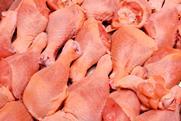
NewsFour arrested as NFCU seizes 4.25 tonnes of illegal meat
Authorities have arrested four men, seized 4.25 tonnes of illegal meat and launched a criminal investigation following a Dudley operation.