


Ingredients & formulation
Discover the latest developments in ingredients and formulation, covering clean label innovation, proteins, flavours, colours, functional ingredients, fats and emulsifiers. Access expert guidance on product development, reformulation strategies and ingredient technologies driving food innovation.
Latest content
 News
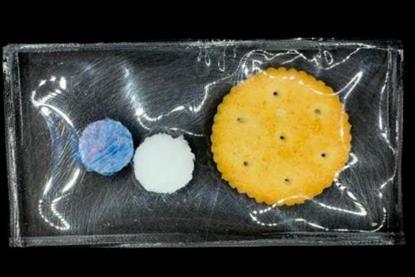
NewsColour-changing starch sensor detects moisture in food packaging
Scientists at the University of São Paulo have created a biodegradable, starch-based sensor that shifts from blue to pink when moisture enters food packaging.
 News
NewsTesco anchors £20m Bramble Fund to drive UK food innovation
Tesco has anchored a new £20 million specialist fund, called Bramble Fund I, forming a joint innovation board to identify, test and scale food system technologies across the retailer’s supply chain.
 News
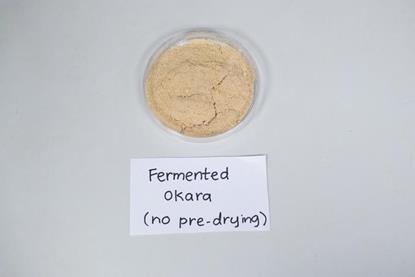
NewsMushroom fermentation transforms okara into protein-rich ingredient
Scientists at NTU Singapore have used oyster mushroom mycelium to ferment okara, boosting its protein content and transforming its flavour profile from sour to savoury.
Featured

Article
Why fragmented product data raises the cost of food non-compliance
Specright’s Andy Stark explores how fragmented product data can increase compliance risk, slow reformulation and drain R&D capacity – and why trusted data is becoming critical to effective AI adoption.
Article
GLP-1 friendly’ has no regulatory definition and manufacturers are shipping it anyway
New Food explains: ‘GLP-1 friendly’ has no regulatory definition. What manufacturers must verify before using the term.
Webinars
- Previous
- Next




Join now
Unlock exclusive industry insights
- Bookmark articles and resources to access anytime
- Enjoy free access to industry leading resources, webinars and insights
- Stay informed with in-depth coverage of food safety, quality, innovation and regulatory change from across the global food and beverage industry
- Receive updates and recommendations tailored to your professional interests
More Ingredients & formulation
 Article
Designing nutraceuticals around biology, not ingredients
Health claims on nutraceuticals can be limited due to the need for scientific evidence, which traditional products often lack. Here, we introduce a new approach to nutraceutical formulation that marries biology with engineering to address specific health issues – and the results are looking good.
 Article
Why scaling food biotechnology is an engineering challenge, not just a scientific one
As fermentation and microbial production scale up, Food Manufacturing Technologies Europe President Ola Elmqvist explains why reliability, efficiency and economics – not biology alone – will determine commercial success.
 Article
From science to shelf: the rise of pet gut health innovation
Elisabetta Pierangelo, Global Vice President of Research & Development at Mars Pet Nutrition, reveals the latest research that is helping to reshape pet food formulation strategies that prioritise gut health for optimum overall wellness.
More Ingredients & formulation
 Article
How wellbeing will drive food sector’s next phase of growth
Backed by data-driven insight, Sharon Bligh from the Consumer Goods Forum cuts to the heart of how manufacturers can get ahead of the curve by catering to the distinct yet varying needs of today’s consumer.
 Article
Rebuilding food from air: how Solar Foods is scaling a new production system
Solar Foods is pioneering a new way to produce protein using energy, microbiology and gas fermentation instead of agriculture. New Food Deputy Editor Ben Cornwell speaks to Dr Juha-Pekka Pitkänen about the technical, regulatory and industrial challenges of scaling this novel food technology.
 Article
How fermentation can transform the global food system
Shirin Bamezai, PhD candidate in synthetic biology at Imperial College London, and Rodrigo Ledesma-Amaro, Director of the Bezos Centre for Sustainable Protein, examine how advances in synthetic biology are transforming this ancient practice for the future of food.
 Article
The new Nexis GC-2060 gas chromatograph: lower operating costs and maximum efficiency for your laboratory
Shimadzu’s new Nexis GC-2060 combines analytical intelligence with innovative hardware to cut gas and energy consumption, reduce manual workload and simplify complex sample analysis. Designed for maximum flexibility and efficiency, it helps laboratories lower operating costs without compromising performance or accuracy.
 Article
The evolution of bioactivity: how women’s health needs could reshape the ingredients industry
Emerging research on creatine, collagen and glutathione is challenging long-held assumptions about the role of bioactive ingredients in women’s health. Enzym Groups Olena Krasovska considers the implications for ingredient innovation, formulation and functional food development aimed at supporting healthy ageing.
 Report
Global Food Supply Chains in 2026: building resilience under pressure
Climate shocks, geopolitical tensions and supply chain disruption are reshaping global food systems. The Global Food Supply Chains in 2026 report explores how the industry is responding as resilience becomes an increasingly urgent priority.
 Article
The challenge of reducing saturated fat without compromising flakiness and lift
Demands for clean-label, delicious products that also meet HFSS requirements may seem contradictory, but there is a solution – and it’s nuanced.
 Article
New Food launches new website designed for food industry professionals
New Food has launched an updated website to improve access to content across food manufacturing, food safety and innovation, alongside a new membership model that provides full access to premium analysis, reports and expert commentary.
 Article
Active lifestyle nutrition: from high-intensity sports to structural everyday performance
As active lifestyle nutrition expands beyond sports products into everyday wellness, Riya Jain explores how advances in protein systems, fibre integration and formulation design are reshaping the category’s next phase.
 Article
Human milk oligosaccharides transition from infant formula to functional ingredients
Advances in precision fermentation and emerging adult clinical data are positioning human milk oligosaccharides as a new class of functional food ingredient beyond infant nutrition, selectively supporting beneficial gut bacteria and immune function.
 Article
Decoding the hidden structure of modern foods: how TD-NMR is supporting plant-based innovation
Unlocking the secrets of plant-based foods, Dr Kevin Nott at Oxford Instruments shows how TD-NMR helps scientists understand water and fat at a molecular level, shaping the next generation of meat and dairy alternatives.
 Report
Scaling Biotechnology and Novel Foods: inside the industrial reality of food innovation
New food technologies are advancing rapidly but scaling them remains the industry’s defining challenge. The Scaling Biotechnology and Novel Foods report explores whow to turn promising science into industrial reality.
 Article
Unlocking Snack Success in Europe with yeast-based ingredients
The evolution of the European snacks market: from the quest for health to the thirst for flavor experiences. As consumer demand for healthier and more sustainable snack options grows, manufacturers must adapt by using innovative yeast-based ingredient solutions. Biospringer offers a range of solutions to meet these challenges and address ...
 Article
Tackling taste, cost and trust: insights from the Bezos Centre for Sustainable Protein 2026 Conference
A week on from the Bezos Centre for Sustainable Protein 2026 Conference in London, New Food Deputy Editor Ben Cornwell reflects on the ideas, debates and breakthroughs that defined the event and why the future of alternative proteins still hinges on three stubborn challenges: taste, cost and trust.
 Article
The return to real: navigating food reformulation and consumer trust in 2026
As consumers push for simpler products, greater transparency and more balanced nutrition, Jo-Ann McArthur, President of Nourish Food Marketing, shares the key shifts and opportunities shaping food integrity and innovation in 2026.
 Article
Positioning prebiotics, postbiotics and fermentates in gut health innovation
Reflecting on the progression of the gut-health ingredients market, Shivani Srivastava shares landmark developments from recent months that indicate future direction and focus for the industry.